Cycle4Europe promotes and strives towards socially sustainable development: ”We want to help the most vulnerable people.”

More orphanages, a tolerable situation for disabled people and resources to be made available for women suffering from the effects of the war in Balkan. But most of all we want the opportunity to highlight the situation of the most vulnerable people in Europe and give them a future without stigmatisation. This is the reason why a group of cyclists have chosen to embark on the 2,500 kilometres long route from Skopje in North Macedonia to Varberg in Sweden and participate in the Cycle4Europe charity event.

“Ultimately, this is about creating more humane living conditions and preventing unnecessary suffering”, Sabina Grubbeson explains, founder of Loza Foundation and initiator of Cycle4Europe.

On 5 September, the cyclists will line up on the starting line in Skopje, North Macedonia, ready to tackle the 2,500 kilometres that will bring them to Varberg and the west coast of Sweden. The journey is a part of the charity event called Cycle4Europe, which is arranged by Loza Foundation and BEWiSynbra in aid of the most vulnerable people living in the four poorest countries of Europe according to the Human Development Index (HDI) of the UN; namely North Macedonia, Kosovo, Moldavia and Bosnia & Herzegovina.

“We hope that this fundraiser will lead to fewer children and adults having to sleep rough. That they will be able to avoid criminality, be able to dress warmly and have shoes to wear. Many of us forget that there is extreme poverty just a cycle ride away from anywhere in Europe. You don’t have to travel to other continents to experience social and economic misery.”

Read more: Jonas Colting cycles through Europe’s poorest countries for vulnerable people’s rights

Sabina Grubbeson brings to light that the inhabitants of this region lack appropriate care, education and financial opportunities. And as disabled people are more often than not refused state aid (financial support from the government/authorities), families are forced to send their children off to institutions with inhumane living conditions.

“Life at an institution may be compared to human storage. Children and adults are not allowed out. They are not receiving any schooling and in some cases, individuals are locked up and left lying in their own faeces. Many have to endure horrendous living situations”, Sabina Grubbeson explains.

The Cycle4Europe project was realised when a Norwegian company called BEWiSynbra started to pay attention to Loza Foundations’ work to promote socially sustainable development. Main sponsor BEWiSynbra now funds the support vehicles, overheads as well as the accommodation and travel expenses for the cyclists.

“As BEWiSynbra is covering all the overheads, all other donations can be transferred in full to our operations and our ongoing work. I am extremely grateful for everything BEWiSynbra does.

For instance, 1,000 SEK equal a child’s yearly consumption of clothes, shoes and activities that counteract alienation.”


Read more: How you can help.

Loza Foundation is a charity foundation that works to improve the lives and current living standards of vulnerable people living in some of the poorest parts of Europe. It was established in 2017 and has been granted a so-called 90-account by the Swedish Fundraising Control.
A dream coming true for the children of North Macedonia – every child gets a bike

Last winter, Loza Foundation donated clothes, shoes and warm winter jackets to the children at orphanages “25 May” and “11 October”. We are now keen on making their dream for a bike of their own come true too.

“It means a lot to the children, both from a sense of freedom as well as giving them confidence. A chance to feel just like anyone else despite the traumas many of them have had to go through”, says Sabina Grubbeson, founder of Loza Foundation.

In December 2018, Loza Foundation started their first aid project specifically aimed at children and this was at the “25 May” orphanage in Skopje, North Macedonia and we quickly went on to the next orphanage called “11 October” in the same area.

“The children were encouraged to write to us and tell us what they wished for. Many dreamt of having a bicycle of their own. For some, this was stated right at the top before anything else. One little boy wrote: ‘I have always dreamt of having my own bike, I really do need one. When I cycle, I feel free and happy and a bike would make me feel like I was just like all the other kids”, Sabina Grubbeson describes.

Last winter, Loza Foundation was in a position to give each child €100 to buy clothes and shoes with and they went shopping with staff members and volunteers. This autumn, we are finally making the big dream come true and donating a bicycle to each individual child. Every child, in total 50 of them between 5 and 18 years old, will be supplied with their very own bike, helmet and lock.

Read more: They will bike 2500 km for Loza Foundation and the most vulnerable people in Europe

“This donation has been made possible thanks to a fundraiser initiative that Martin Bekken and Jonas Olofsson at BEWiSynbra, from our charity event Cycle4Europe, have come up with and implemented. I cannot begin to describe how fantastic this is.”

The idea is that the children will receive their bicycles the day before Cycle4Europe will start in Skopje, North Macedonia, where hundreds of cyclists will set off on their route. The event will span 2,500 kilometres, all the way from Skopje to Sweden, and the purpose is to highlight Loza Foundations’ work for the most vulnerable people in the poorest countries of Europe.

“The children at these orphanages have had a horrible ordeal and they are sadly not included in the normal Macedonian society. They don’t have the natural support of parents and family and therefore need extra support and guidance”, says Sabina Grubbeson.

When Loza Foundation talked to staff members and counsellors at the orphanages, they described the need these children have of being able to channel their sense of betrayal and deceit that the neglect has caused and that positive elements in their lives are utterly important for the children to have faith in the future. Because of this, Loza Foundation will not stop at bikes. They will also strive to present the children with the opportunity to enjoy different sort of activities.

“We will get to tag along for a longer period, see how the children and support them in their own individual needs. When they turn 18, they are no longer allowed to stay at the orphanage and we obviously want them to be mentally strong and comfortable in their own skin by then so that they can find a place in the Macedonian society.”

Do you want to join the Loza Foundation family and help a child in North Macedonia by donating on a monthly basis?

Find out more here.

The Demir Kapija institution in North Macedonia is being refurbished

The work that Loza Foundation carries out coupled with the article in the Swedish Newspaper Göteborgs-Posten was a real eye-opener for the Minister of Social Welfare.

The correspondent trip to Institution Demir Kapija in North Macedonia turned into a series of articles in Göteborgs-Posten, which highlighted poor conditions and invoked strong reactions not least within Macedonian authorities that have now decided that the institution is to be refurbished immediately.

“This is proof that our work really does make a difference”, says Sabina Grubbeson, founder of Loza Foundation.

In  January 2019, Sabina Grubbeson travelled to North Macedonia with a reporter team from Göteborgs-Posten with an aim of telling the rest of the world about the unbelievable deprivation that the disabled people at the institution in Demir Kapija has to cope with. The result is the article series called “This is where the weakest in Europe live in deprivation“, which has attracted a lot of attention and is nominated to Wendelapriset 2019 (the Wendela award) for the best social report of the year.

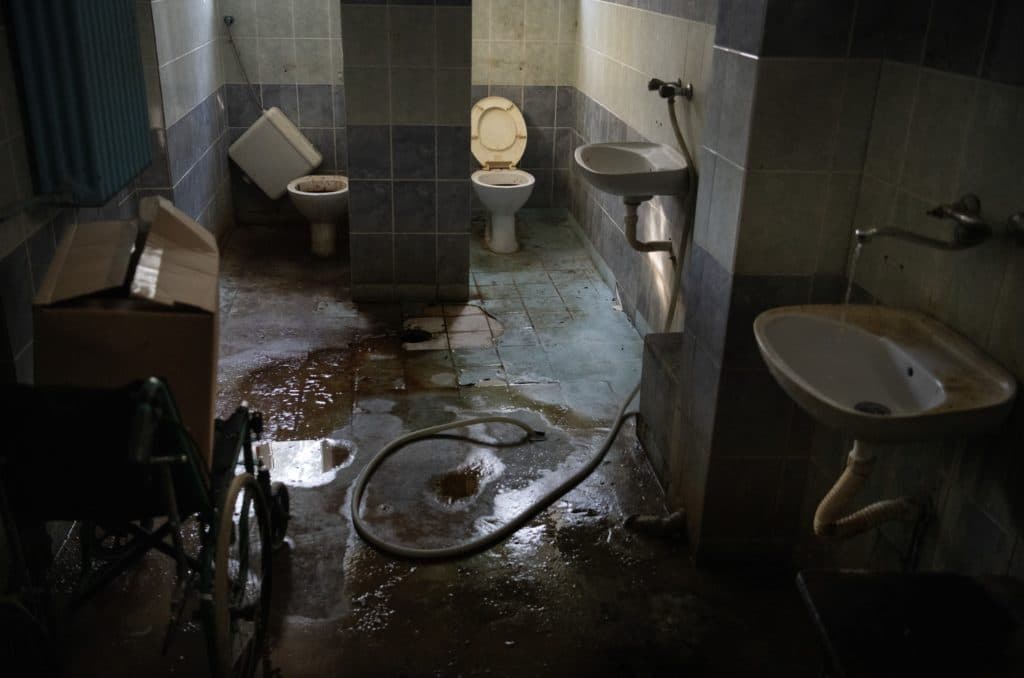
The Macedonian authorities are reacting too. Minister of Social Welfare, Mila Carovska, tells Göteborgs-Posten that the series of articles was a definite eye-opener and that they will start renovation work straight away, tackling the toilets, damaged flooring, installing proper lighting as well as repairing internal and external walls.

Sabina Grubbeson, founder of Loza Foundation, is both pleased with and relieved by this decision.

“This will improve the living conditions considerably for these people. It has been difficult for us to help as the needs have been vast and we have not been given permission to renovate. The new situation will give us breathing space and allow us to take care of the most pressing needs”, she explains.

Read more: Article series about the Loza Foundation and the forgotten Europe in Swedish newspaper Göteborgs-Posten

The lack of fully-functioning toilets has meant that the residents at the institution have relieved themselves on the floor, in the dorms and stairwells.

“Refurbishing floors, walls, doors and windows will make it easier to keep the institution clean. There will not be a constant draught and the heat will remain inside the building during the winter. Making the electric installations secure and putting up lighting will also drastically improve the situation for both residents and staff members. In the past, they have had problems with ceiling fires and water leakage that has travelled down electric wires and ended up inside the fuse box.”

The renovation work is supposed to be finished in the latter part of 2019.

Sabina clarifies: “Thanks to the renovations, we will now be able to provide the residents with clothes and personal hygiene articles in an environment and not be afraid they will be ruined in the poor conditions. The donated items will last and will work. Refurbishing the institution will also have a positive impact on the staff. They will be able to work in more humane conditions, which in turn will have a ripple effect when it comes to how they care and treat the residents.”

In a couple of weeks, Loza Foundations plans to deliver individual lifts to the institution at Demir Kapija. Right now it takes two, sometimes three people to get a resident out of bed, which means many of the individuals living at the institution have never even made it out of bed.

“We want to make this work so that residents, despite disabilities, will have freedom. I have questioned why the state does not supply lifts to the institution, but I have not been given any answers. The problem is most probably linked to administrational issues, e.g. that such a purchase ends up between the separate jurisdictions of two ministers, in this case, the Social Ministry and the Ministry for Health and Healthcare, and that no one has put their foot down in this matter. All too often, this is where the problem arises; someone has to defend the human rights and highlight the needs of the people that are unable to defend and stand up for themselves. ”

Read more: 400 pairs of shoes arrived in Macedonia!

The idea is also to change one or two rooms where the sole focus will be rehabilitation.

“We have found the residents and the staff to have a need to arrange their day around something, to do something together which inspires everyone to treat each other with caring warmth. I hope this will lead to more positivity and inspiration.”

The renovation of Institution Demir Kapija will enable Loza to improve the residents’ living conditions this year, rather than having to wait. That said, the foundation still needs further donations in order to give everyone the help they need.

“We rely on contributions and donations to maintain our aid work. I, therefore, want to encourage everyone, individuals as well as companies, to sign up for our monthly donation package. A small sum of money every month might not make all that much of a difference for us in a welfare state, but for a person in North Macedonia, it could literally mean the world”, says Sabina Grubbeson.

The news of the refurbishment at Demir Kapija gives Loza Foundation new strength and energy to carry on defending the basic, human rights of individuals at institutions and orphanages in regions such as North Macedonia, Bosnia and other countries in Europe.

“This proves that you can change the world by creating support, lobbying and strengthening the belief that every single one of us can impact and improve the lives of other humans if we stick together. I am very impressed by Evalis Björk and photographer Robin Aron at Göteborgs-Posten, who spoke up for the individuals that do not have a voice and conveyed the situation of the residents at Demir Kapija with such empathy.”

Institutionen Demir Kapija i Nordmakedonien
 Dirty, non-functioning toilet, but this room is still being used by the residents. Special institution Demir Kapija in Macedonia.

Jonas Colting cycles through Europe’s poorest countries in support of vulnerable people’s rights

In September 2019 six time triathlon World Championship and European Championship medalist Jonas Colting will cycle from North Macedonia to Sweden, 2500 kilometers with challenging terrain in support of the charity event Cycle4Europe.

– It’s my way to spotlight how vulnerable people are treated in nearby countries. It’s hard to turn away from their suffering, says Jonas Colting.

This autumn the Loza Foundation and the company BEWiSynbra arrange the charity event Cycle4Europe. In 17 days the participants will cycle parts of or all of 2500 kilometers through some of the poorest countries in Europe to raise money for the Loza Foundation’s aid projects in North Macedonia and other countries.

Jonas Colting, six time triathlon World Championship and European Championship medalist, writer, speaker and fitness coach, will ride all the way from the start in Skopje, North Macedonia, to Varberg on the Swedish west coast.

– This is a challenge with a worthy cause. To help raise money for the Loza Foundation, an organization that helps vulnerable people who live in inhuman conditions in Europe, is something I support wholeheartedly, says Jonas Colting.

This is not the first time that Jonas Colting combine spectacular physical feats with charity. He has swum from Gothenburg to Stockholm for Wateraid, round Phuket island in Thailand to raise awareness for ocean pollution and round Gotland for Swedish general health.

But to cycle from North Macedonia through the mountainous parts of Kosovo and Bosnia and all the way to Sweden is a new kind of challenge.

– The total distance is challenging. It’s tough to ride from southern Europe to Sweden in just two weeks. And it’s very mountainous, especially during the first week. Many of the stages have twice the climbing than some Tour de France-stages.

– The preparations are extensive, to scout the roads, know their conditions and find out where there’s fresh water, and so on. And I suspect that the weather will still be hot when we ride in early September.

Jonas Colting hopes that his participation in Cycle4Europe will make more people aware of the Loza Foundation’s work for the most vulnerable people in Europe – and that both companies and individuals will contribute to the fundraising that is essential for the foundation.

– This is how I contribute. And it’s going to be extremely interesting and exciting to get to know these parts of Europe. I know from experience how incredibly close you come to a country and its people from a bike, he says.

Jonas Colting’s support means a lot to the Loza Foundation.

– Jonas’ participation confirms how important our work is. More people need to learn about the conditions that many are forced to live in in Europe and realize that everybody must contribute to a socially sustainable future, says Sabina Grubbeson, founder of the Loza Foundation.


If you wish to participate in the event and support Cycle4Europe, please contact Sabina Grubbeson at +46 733 213 823, info@lozafoundation.org for more information.

They will bike 2500 km for Loza Foundation and the most vulnerable people in Europe

From Skopje, North Macedonia, to Varberg, Sweden, on two wheels:

The charity event Cycle4Europe will bike from Skopje in North Macedonia to Varberg on the Swedish west coast. The goal is to raise money for the Loza Foundation, that works for vulnerable people in the “forgotten” Europe.

– I have dreamed of this for years, it’s great that it finally happens, says Sabina Grubbeson, founder of Loza Foundation.

The start is in Skopje, the North Macedonian capital, on September 6. On September 19 the cyclists will arrive in Varberg on the west coast of Sweden. Cycle4Europe is an iniative from Sabina Grubbeson, founder of Loza Foundation, and the company BEWiSynbra. The Cycle4Europe will ride approximately 2500 kilometers through some of the poorest countries in Europe to raise awareness and money to the Loza Foundation and their work for vulnerable people in the “forgotten” Europe. It will be possible to follow the journey through both Loza Foundation and BEWiSynbra’s social media channels during the ride.

– Our work is totally dependent on getting money through gifts and contributions from businesses and people. This gives us the opportunity to raise awareness and form public opinion also outside Sweden, says Sabina Grubbeson.

BEWiSynbra finances the event and participates with its own bicycle team, Team BEWiSynbra. Every year they support a number of good causes. Last year Team BEWiSynbra cycled 900 kilometers to support cancer research, but they have never biked this far.

– Our company stands for environmental sustainability. Now we want to be part of Loza Foundation’s work for social sustainability. What they do to help vulnerable people is amazing och this is our way to support it, says Christian Larsson, head of marketing and communication at BEWiSynbra.

The start in Skopje is symbolic as Loza Foundation works with children and teenagers here. Through the children’s homes “25 May” and “11 October” boys and girls get support for security, clothes and hope for the future.

– Children who doesn´t have family support are particularly vulnerable in the poorest parts of Europe. We aim to meet every child’s needs, build self esteem and improve their future, says Sabina Grubbeson.

Apart from the two children’s homes in Skopje, Loza Foundation supports projects for disabled people in both North Macedonia and Bosnia-Herzegovina. They also work with traumatized women and children, who still live in the many refugee camps in Bosnia-Herzegovina, 20 years after the war ended.

– We believe in long term commitment and work and we will follow these people for years to ensure that they get the help they need, says Sabina Grubbeson.

She hopes that Cycle4Europe will help Loza Foundation reach their target of raising 1.5 million SEK this year.

– That’s the sum we need to do the projects we have planned and handle those we have started. We really hope that many more want to be part of Cycle4Europe where we raise awareness about the most vulnerable people in Europe. Together we can create a brighter future for those who have lost hope.


If you want to support and be part of Cycle4Europe contact Sabina Grubbeson at (+46) 733-213 823, info@lozafoundation.org for more information.

Loza Foundation’s first aid project at the children’s home ”25 May” has now been carried out

Through Loza Foundations aid project, the children at the children’s home ”25 May” in Skopje, Macedonia have now been given warm clothes and shoes for the winter. Founder Sabina Grubbeson was there when the 24 children got to go on the first shopping trip of their life.   

– To get to see the sheer joy in the eyes of the children, it was just such an amazing feeling!

Sabina Grubbeson travelled to Macedonia in January in order to be there when the children at the children’s home “25 May” in Skopje were given winter clothes. The 24 children aged between 11 and 18 have just moved out from the bigger institution, previously subjected to scandalous accusations, and into smaller group residencies.

“Today 5-6 children live in each house together with a staff member from the children’s homeand the children are sharing rooms two and two”, Sabine Grubbeson, founder of Loza Foundation tells us.

”25 May” is the Loza Foundation’s first aid project specifically directed at children. Through donations from various corporations and private individuals, the foundation has been able to carry out their first relief effort, namely to give the children warm clothes and shoes for the winter. Joined by ten volunteers, invited by Glorija Naumovska, project coordinator at Loza Foundation in Macedonia, the children were allowed to go on their first shopping trip and purchase their own clothes.

“These youngsters are used to being given hand-me-downs and second-hand clothes, so to just enter the shopping mall and being allowed to buy something for themselves was a big thing. They had been waiting for this day for months and they were full of anticipation.”

This proved to be a memorable day for both children and volunteers alike. Sabine describes how the children’s initial shyness inside the stores, soon changed into elation and lots of laughter.

“Young Osman, 11 years, and Leonardo, 12 years, were especially curious about how the credit card worked and wanted to know everything there was to know about how the money could come from the plastic card and into the till. Eventually, the employees in the shop let Leonardo help out as he was so inquisitive. Both the shop assistants and the volunteers laughed with delight and the atmosphere was simply wonderful, it makes me smile just thinking about it”, says Sabina.

When the shopping trip came to an end, each child had been given a whole bag full of various garments including winter shoes, winter jacket, trousers, sweaters, underwear and socks.

“During the day, the children, the manager of the children’s home and the volunteers discussed what they all thought each child needed the most. The children also learnt what a budget is, what a budget might include and they helped each other out to count how much they had been shopping for.

Apart from the clothes donation, Loza Foundation has also made an activity contribution for each child so that he/she will be able to develop his/her own interest or hobby. For instance one of the boys wanted to learn how to drive and get a driving license in order to increase his chances of finding a job when he finishes school. So, this means he has now been able to enrol at the local driving school.

“It is important to contribute wherever and with whatever we can to give these children the opportunity to land on their feet and enter the adult society in the best possible way.”

Apart from ”25 May”, Loza Foundation will help one more children’s home in Macedonia called “11 October”

“A few of the children have siblings there and we will carry out the projects in the same way as we have just done at “25 May”. We have already started talking to the children at “11 October” to find out what they wish for. Some of them say they would like to learn English, one child wished for a guitar and several were dreaming of having their own bike”, says Sabina.

Loza Foundation plans to follow these two children’s homes for a long period of time to ensure that the children receive the help they need and what will give great results.

“Our goal is to give these children a chance to succeed in the future, to gain self-confidence and have faith in the future. These are the sort of things that make all the difference!”

Article series about the Loza Foundation and the forgotten Europe in Swedish newspaper Göteborgs-Posten

In January 2019, the Loza Foundation, together with reporters from Swedish newspaper Göteborgs-Posten, traveled to Special Institution Demir Kapija in Macedonia. In a series of articles they describe the situation at the institution, the vulnerability and the crying need for help.

To get to the article series, click here.

Loza Foundation helps the “25th of May”, a children’s home in Macedonia

Loza Foundation is now starting their first aid project especially aimed at kids. In a joint venture with the children’s home “25th of May” in Macedonia, the aim is to give children and teenagers a helping hand, offering them support and restore their hope and belief in a brighter future.

“Children without parents in the poorest parts of Europe are especially vulnerable. We want to be there for them for a longer period of time and give them better prospects of eventually becoming a part of society again”, says Sabina Grubbeson, the founder of Loza Foundation.

During the summer this year, Sabina Grubbeson visited a children’s home in Skopje, Macedonia. It is called “25th of May” and the staff here take care of 24 children aged 11- 18. This children’s home is being given a relaunch after a scandalous period. Earlier in the spring, allegations of sexual abuse were found to be true and it was revealed that several children at the institution had suffered these crimes. A few of the girls had become pregnant, the youngest no more than 13 years old.

“When I arrived at the institution it was like walking into a derelict prison. The interiors and all the things in the rooms were broken and bore witness to tragic circumstances. Children had to live in squalor and there was a distinct lack of love and tender care”, says Sabina.

As media picked up on the story, a number of staff members were fired, arrested and charged. New, well-educated personnel were brought in and the children were moved out of the old institutional premises into new, smaller residential homes. The issue today is that they lack money and resources to be able to give these children and youngsters a meaningful life.

“I was touched by the fact that these children have been in a vulnerable position and suffered hardships for such a long time and now, someone finally wants to make their life better, but they don’t have the resources to pull it off. For me personally, it feels important to give the children an opportunity to participate in some positive activities as a part of the healing process. Partly to boost their self-confidence and self-esteem and also give them a belief in the future.”

Working together with the staff, Loza Foundation asked the children to write wish lists describing what they would like and dreamt of. This project took a great deal of time as the children had suffered so much disappointment and betrayals from the adult world around them and they now weren’t sure whether they would dare to voice their own dreams and wishes.

“But eventually 24 handwritten letters arrived, one from each child, with personal accounts of what had happened to them in their past, their background and what they wished for in terms of clothes, socks, a bike or a pair of football shoes.”

Loza Foundation are now eager to make their wishes come true. To begin with, we will focus on warm clothes and shoes and then during spring 2019, the children will be given an allowance, which will pay for an activity of their choice that they have a talent for or an interest in. This could be anything from learning to play the guitar to riding a bike.

“We see this as an investment in each individual child. They get to feel they are good at something and get to participate in an activity where they express themselves and channel their energy into something positive”, says Sabina Grubbeson.

You can participate too by donating money to the project via Swish or Bankgiro. Just write “25th of May” in the comments field.

“We will be there for these children long-term. The children are the future of our world. It is important to give them the right circumstances to evolve and grow by investing in them right from the start”, says Sabina Grubbeson.

Loza Foundation speaks up for the women that survived the rape camps

Sabina Grubbeson, founder of the Loza Foundation, meets one of the women who survived several rape camps during the war in Bosnia.

Project in Bosnia for female war victims:

For more than 20 years, the female survivors of the Bosnian war have been silenced, been told to keep quiet, all alone with their traumatic experiences from rape camps, sexual assaults, torture and humiliating degradation. Loza Foundation feels that this is the time to break down the silence culture and support these women; a project they are starting as a joint venture with the organisation The Power of Women.

“By giving them psychological support as well as providing legal aid at the trials, we will seek redress the grievances and crimes they have suffered”, says Sabina Grubbeson.

Their lives were ruined by the horrors of war. The women that survived the rape and concentration camps during the Bosnian war have suffered in silence mostly due to the shame and guilt that were unjustly put upon them. Many of them have isolated themselves with their traumatic memories or even take their own life.

“Almost 25 years have passed and many of these women are in desperate need of medical and psychological aid, the majority are unemployed and live in poverty. Many have given up hope and their depression is passed on to children and grandchildren. Patterns need to be broken and society putting the lid on things certainly won’t help”, Sabina Grubbeson explains.

A report presented in 2017 by Amnesty International estimates that approximately 20,000 women were subjected to rape and sexual assaults during the Bosnian war, 1992-1995. The report, based on two years of research, shows that the victims are still denied justice. Less than 800 survivors have been given a certain monthly income. And since the war crime trials begun in Bosnia 2004, less than one percent of the total number of sexual assault victims have made it to court.

“Loza Foundation is in the process of developing a joint venture with The Power of Women in order to help the women that have had to endure terrible hardships. Not only by giving mental and financial support, but also by providing legal aid at the trials.”

In her research about survivors of the war, there was one life story that really touched Sabina, and that was the story of Leila, who was 16 when the war broke out. Her life changed dramatically overnight and suddenly not worth more than the packets of cigarettes she was sold for to various military brothels. She was raped day in and day out, was tortured and put through mock executions. Leila survived, but today, two decades later, she is still suffering greatly from her ordeals during the war.

“For some people, the war is over. For us, it has only just begun.” This is the start of the book about Leila and it describes to the reader what happens to a woman, who loses the right to her own body and is put through starvation, torture and degradation. But it also brings up how many women managed to survive the most atrocious crimes against humanity.

Leila has by now turned 42 and lives in a house with her husband and their three children. The memories from the war are still haunting her, but thanks to The Power of Women, she has regained hope and faith in the future. The organisation has helped Leila to get by. She started growing lavender and a donation gave her five beehives. So far she has managed to make a living on lavender soap and selling honey.

“In August 2018, I got to meet Leila and she told me about her experiences. Leila is one of the few, who have stood up for her rights while others have remained silent, paralysed by the emotional traumas they have had to endure. But now, twenty years after the war ended, it seems as though some of these women are ready to speak up, to break the years of silence. Perhaps a certain period of silence is required before the blockages can crack, or perhaps it is just time for action.” Sabina Grubbeson deliberates.

More opportunities are now being made available through Loza Foundation and The Power of Women for private individuals and companies to make donations to the various projects for female war victims in Bosnia.

“We ask for help so that we can support these women and give them the chance of a brighter future. For every year that passes, they lose the hope of ever having their grievances redressed, but they cannot forget what they have been put through. We shouldn’t either”, says Sabina Grubbeson.

”I want to give people a wake-up call”

Photographer Joakim Roos’ thoughts of his work with Loza Foundation:

He has been a professional photographer for 30 years and has visited the Balkans many times. Through his work with Loza Foundation, Joakim Roos is hoping to give his audience an insight into these countries and to document, as candidly as possible, what the situation is really like for some of the most vulnerable women, children and disabled people in Bosnia and Macedonia.

“I hope that my images will touch people, make them engage and give them something to think about.”

How come you started working with Loza Foundation?

“Sabina Grubbeson contacted me regarding the project for disabled people in Demir Kapija, Macedonia. She knew I had spent lots of time photographing in the Balkans and she liked my photos.”

What made you interested in this particular charity organisation?

“Loza is extremely dedicated to their projects and a commitment is there with strong roots in the Balkan region. The projects are relevant and credible. I like that.”

How did this collaboration start?

“We made an outline of how Loza Foundation wants to communicate. I am largely a ‘black and white’ photographer and I shoot mostly documentary images. To my mind, this suits the foundation’s desire to depict a most honest view of what the situation is like on the Balkan Peninsula.”

How many times have you been to the Balkans?

“My first visit to Bosnia was back in 1995 and then I have returned several times in 2001, 2003, 2004, 2004, 2005 and 2013. Apart from those Bosnia visits, I have possibly done 20 trips or so to the other Balkan countries; Serbia, Croatia, Kosovo, Albania, Romania and Bulgaria. The Balkans is a truly amazing, exciting region. There is constant progression, which is interesting to follow, actively participate in and contribute to through Loza Foundation.”

What was it like to visit the Special Institution at Demir Kapija for the first time?

“It was a real eye-opener and tragic to witness the poor living conditions the disabled people had to cope with. Hidden away from the rest of society. Deficiencies and shortcomings on all levels. I remember thinking this is neither humane nor dignified. The people living here have disabilities that differ vastly and yet they are shoved together in no particular order. It must be very difficult to get to grips with individual needs and to also understand which abilities could benefit the rest of society. Many of the residents should be able to have a meaningful existence in the real world, outside the walls of the institution.”

What message do you want your images from Demir Kapija to convey?

“A sense of vulnerability, but at the same time describe that everyone living there is a part of the human race and ought to have his/her needs taken care of. These people should be seen, accepted, respected and be allowed to participate in society based on each individual’s unique ability.”

What are you working on right now?

“The Bosnia projects are being launched this autumn, 2018. They are primarily linked to people with disabilities, but also include women that were victims of rape during the war (1992-1995). To rebuild your life after a war is a long and difficult process. There are still IDPs (internally displaced people) in Bosnia, people that have ended up in a refugee camp and remained there for more than 20 years. Time is literally standing still and I can see people finding it tough that they cannot return to where they came from or to not be given the opportunity of building a new life for themselves. Many have developed chronic stress symptoms, but with the right form of aid, they can be helped.”

How do you think these meetings with people going through tremendous hardships affect you?

“As I am taking photos, I generally come up close and personal, which makes it harder for me to remain neutral and unaffected. It is tough to meet so many individuals that suffer, but I also feel touched in a positive sense when I see each person’s ability and warmth.”

What happens next?

“Right now I am studying social anthropology and global development at Gothenburg University. To briefly summarize, these courses are aimed at raising cultural awareness and understanding, as well as analysing where the world is heading and what would be a desirable development. Combining photography with the knowledge of what great aid work should look like is exciting.

Follow us on Twitter

Last Tweets